


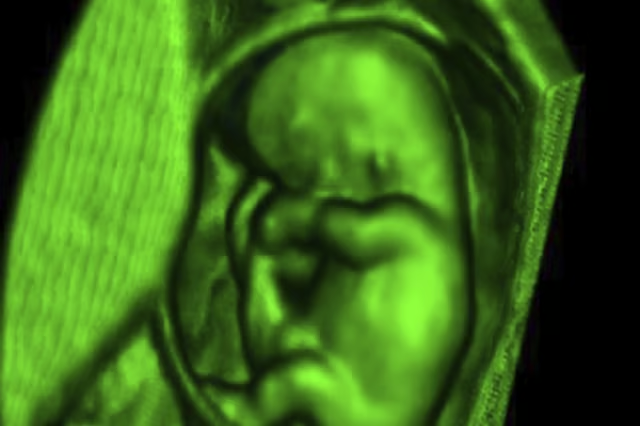
Exposure to harmful substances in the earliest weeks of pregnancy -- often before a woman realizes she's pregnant -- can pose risks to human embryos. Although high doses of radiation can be harmful, in the vast majority of cases, the amount of radiation exposure during an x-ray is not enough to affect a pregnancy or harm the developing embryo. Talk with your doctor if you had an x-ray in the first four weeks of pregnancy.
X-Ray Exposure and Amounts
Your baby is exposed to some radiation whenever you have an x-ray, but doses of less than 5 rads -- rads are the units used to measure radiation exposure -- are not known to cause any short-term harm to a developing fetus. Conventional x-rays generally expose a developing baby to far less radiation than this level. For example, an abdominal x-ray typically exposes a fetus to an average of 0.29 rads, and average exposure from a pelvic x-ray is 0.34 rads.
Pregnancy Effects
Doses of 5 rads or less do not increase your risk of losing the pregnancy, note the authors of a research article published in May 2004 in the "American Journal of Roentgenology." Radiation doses of 5 to 50 rads cause a slightly increased risk of death of the embryo or failure of the embryo to implant in the uterus, according to the Centers for Disease Control and Prevention.
Developmental Effects
Major malformations in an embryo occur spontaneously in around 3 percent of all pregnancies, with or without radiation exposure. X-ray exposure of less than 5 rads between the second and fourth week of pregnancy generally does not increase the risk of birth defects, according to the United States National Council on Radiation Protection. The risk of congenital malformations or birth defects most likely does not increase unless a pregnant woman has been exposed to 10 to 20 rads, according to CDC.
Possible Long-Term Effects
X-ray exposure in very early pregnancy can result in decreased fetal growth, but only if the fetus is exposed to 5 to 50 rads or more, CDC reports. X-rays could result in a slightly increased risk of childhood cancer for your baby. CDC states that 0.3 percent of children whose mothers were not exposed to any x-rays during pregnancy develop childhood cancer. Children exposed to up to 5 rads during their mother's pregnancy have a slightly increased risk for childhood cancer, with 0.3 to 1 percent affected. Keep in mind, however, that 5 rads is much higher than the dose a fetus is typically exposed to with most x-rays. Discuss any concerns you have about pregnancy and radiation exposure with your doctor.