
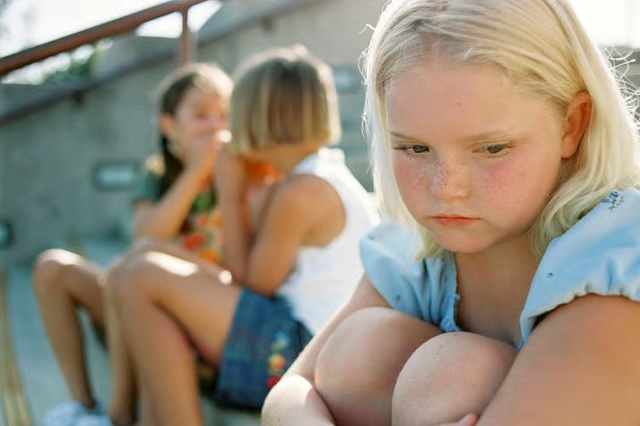


Your child’s self-esteem reflects how he feels about himself and contributes to how he approaches the world. Although his level of self-esteem can vary slightly from day to day, he has a general feeling about his value and self-worth. Low self-esteem will be reflected in his behavior, body language, approach to life and overall demeanor.
Avoidance Behaviors
If a child has low-self esteem, she likely doesn’t feel comfortable around new people or situations. If this is the case, she may feel awkward and tend to avoid anything unfamiliar. Often, she will be hesitant to take risks or move out of her comfort zone. With this type of behavior, the child may miss valuable social opportunities and situations where she could learn and grow from a new experience.
Low Confidence Level
A lack of confidence often goes hand in hand with low self-esteem. You may notice your child talking negatively about himself and his abilities. He may be overly critical of the skills he possesses or how he looks. He probably uses pessimistic phrasing about the world in general. Joe Navarro, former FBI counterintelligence agent and author, points out in an article for "Psychology Today" that body language, such as:
- slumped shoulders
- sad facial expression
- downcast eyes
- will show a low level of confidence without a person even saying a word
Lack of Effort
A child with low self-esteem may view herself as being unskilled or incapable of completing tasks. If she actually attempts a new activity but fails, she may just give up and walk away. A child with a higher level of self-esteem is more likely to be confident enough to try again even if the first attempt didn’t work. To encourage your child to keep trying, the American Psychological Association suggests praising your child for her efforts, not for her personal qualities.
The Emotional Toll
A child with low self-esteem may experience any number of negative emotions. If talking to your child and working with him doesn’t seem to help alleviate the issue, you may want to get some professional help for your child. Child therapists and counselors can help your child develop some coping strategies and problem-solving techniques.