
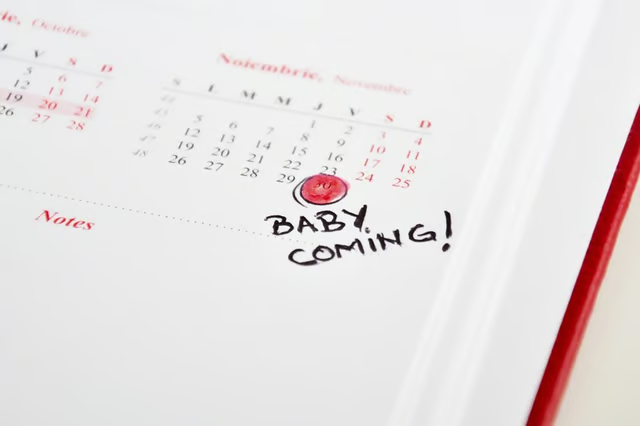


Although a typical pregnancy lasts around 37 to 42 weeks, notes MedlinePlus, no two pregnancies are alike.
While one pregnant woman may begin experiencing labor symptoms at 37 to 38 weeks, another may not even see any signs of labor at 40 to 41 weeks.
Nipple stimulation via pumping may help bring on contractions if your due date has passed. However, you should always consult with your midwife or physician before trying any natural methods of induction.
Nipple Stimulation Explained
Nipple stimulation is one of the better known ways to naturally bring on labor for a woman whose cervix has started started to thin, soften and open.
This procedure can be performed by hand or with the help of a breast pump, according to the American Pregnancy Association website. This process involves gently massaging the nipple and the areola, in a firm, yet gentle, circular motion, which simulates the suckling of a baby and tricks a woman's body into thinking it is breastfeeding.
Nipple stimulation causes your body to produce the hormone oxytocin, which is the hormone that causes the uterus to contract. Synthetic oxytocin is what doctors use to medically induce labor.
Cover your breasts with a towel that has been soaked in warm water, to help warm your breasts.
Uncover one breast after 5 minutes and place your breast pump shield on.
Pump that breast for approximately 15 minutes, and then remove the breast pump shield and cover that breast up with another warm, moist towel.
Your breasts may or may not produce a small amount of breast milk. The point of pumping is not to produce milk but to stimulate your nipples. Milk production is not necessary for nipple stimulation to be successful in producing oxytocin in your body.
Uncover your other breast, place the breast pump shield on and pump for around 15 minutes. Stop pumping if you begin to feel a contraction. Resume pumping after the contraction has passed.
Remove your breast pump and cover your breast with a moist, warm towel.
If contractions have begun, start timing them and see if they stay regular. Stop pumping after contractions are 1 minute long and 3 minutes or less apart.
If you are not experiencing any contractions or if contractions are sporatic, start the process over and pump each breast for 5 minutes. Complete this process for 1 hour, up to three times per day.
Warnings About Nipple Stimulation
Don't use nipple stimulation to induce labor without your doctor's approval or before you have passed your due date. Avoid nipple stimulation if you've had pregnancy complications, such as pre-eclampsia, high blood pressure or gestational diabetes, warns the BabyCenter website.