
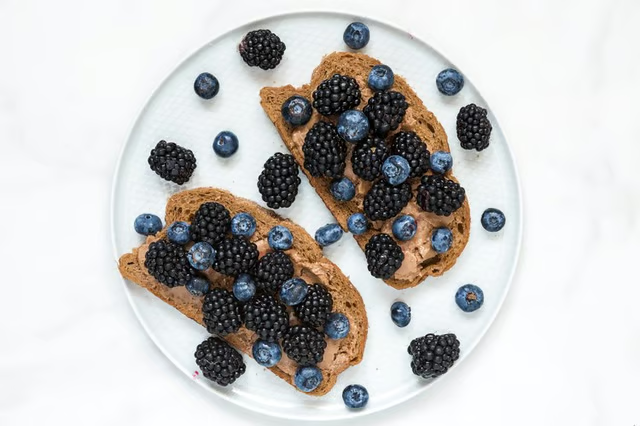
Eating enough nutrient-dense foods on a regular basis is essential for the proper growth and development of your toddler. Children in the U.S. consume too many calories but not enough nutrients, and engage in too little physical activity, a combination which can lead to childhood obesity. Helping your toddler meet his calorie needs by offering him a variety of healthy foods will optimize his development and give him the best start in life.
Basic Guidelines
According to the U.S. Department of Agriculture, young children ages 2 and 3 need about 1,000 to 1,400 calories each day to maintain a healthy body weight. Active toddlers require more calories than those who are inactive, and older toddlers need more calories than the younger ones. Since toddlers have small stomachs, offer your toddler a meal or snack every few hours on a regular basis. Most toddlers stop eating when they feel full.
Calories Per Pound
Your toddler’s body weight can also help determine his daily calorie needs. According to Hasbro Children’s Hospital Pediatric Surgery Handbook, children 1 to 7 years old require 75 to 90 calories per kilogram, or about 34 to 41 calories per pound of body weight each day.
Calorie Composition
Carbohydrates, protein and fat make up your toddler’s total calorie intake. According to the Institute of Medicine, children ages 1 to 3 should consume 45 to 65 percent of their calories from carbohydrates, 5 to 20 percent from protein and 30 to 40 percent of their daily calories from fats. Healthy fats are found in avocados, vegetable oils, purified fish oils, olives and hummus. Healthy high-carb foods include:
- fruits
- vegetables
- legumes
- milk
- yogurt
- whole grains
Nuts, seeds and peanut butter also contain some carbohydrates.
Sample Menu
An example of a toddler-appropriate menu consists of a breakfast of one slice of multigrain toast with 1 tablespoon of peanut butter, one-half of a banana and one-half cup of whole milk. For a morning snack, one-half cup of cheerios and one 4-ounce container of plain, whole-milk yogurt fits the bill.
A nutritious lunch might include one-half cup of V8 vegetable juice and a grilled cheese sandwich made using one slice of multigrain bread, one slice of cheddar cheese and 1 teaspoon of tub margarine. Provide a healthy afternoon snack such as one-fourth cup of raisins.
According to the USDA Food Tracker, this menu contains 1,020 total calories; 18 percent of those calories are from protein, 38 percent from fat and 48 percent of the calories are from carbohydrates.