


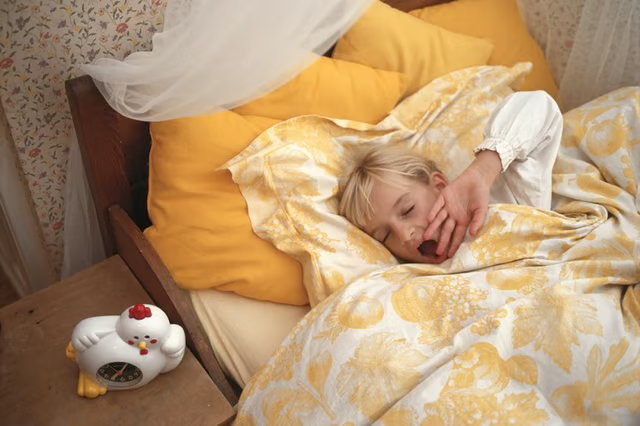
Yawning, a normal human activity that also occurs in many animals, affects even in fetuses as early as 11 weeks after conception. Yawns occur involuntarily; a person can’t force themselves to yawn or stop a yawn once it starts. The causes of yawning are not well understood. Excessive yawning is even less understood than normal yawning, particularly in children, but several explanations exist.
Symptoms
Newborns yawn more than adults, averaging 30 to 50 yawns a day compared to less than 20 yawns per day for adults, Puneet Gandorta of the University of Maryland Medical Center reports. Yawning appears to decrease with the number of hours a person sleeps each day. Excessive yawning exceeds these limits.
Psychological Reasons
Children over age four yawn excessively when exposed to other people yawning, according to the University of Connecticut. Boredom increases yawning, the University of Washington states, citing a study of 17 to 19 year olds that showed an increase in frequency and duration of yawns in those watching a colored bar over those watching a music video.
Physiologic Causes
The most common cause of yawning is lack of sleep, with most yawning occurring in the first waking hour and the second most common time being the hours before bedtime. In newborns, excessive yawning occurs as a symptom of prenatal drug withdrawal. Part of the evaluation for neonatal drug withdrawal involves counting the number of times an infant yawns. Infants that yawn more than three to four times over a half an hour period have excessive yawning, the Royal Children’s Hospital reports. Children may also yawn more when they’re overheated, as a cooling mechanism, Gandorta reports. Absence seizures can include yawning as a symptom, according to “Pediatric Neuropsychiatry” published by Lippincott, Williams and Wilkins in 2005.
Diagnosis
Alert parents often note that their child yawns more than usual. If no obvious cause such as lack of sleep exists, medical evaluation to rule out brain dysfunction, is warranted. An electroencephalogram can diagnose brain dysfunction.
Treatment
Excessive yawning usually requires no treatment. Children who yawn from sleep deprivation need more sleep. Children suffering from seizures or other brain dysfunction require medical treatment. Infants undergoing drug withdrawal need close medical attention and medications to assist with withdrawal