


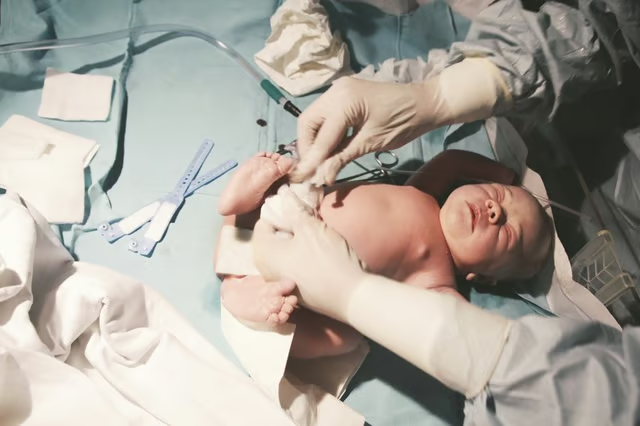
A discolored bellybutton -- usually blue or purplish -- is caused by an umbilical hernia. Ten percent of newborns, particularly girls and infants with African heritage, have umbilical hernias. These hernias are usually painless, and they often disappear on their own by age 2.
Definition
An umbilical hernia occurs when a loop of intestine pushes through the weak abdominal muscles at the belly button. This type of hernia is not as dangerous as hernias in the groin because the intestine is usually not compressed by the abdominal muscles, and food is able to move through the intestine despite the hernia. The pediatrician will usually recommend that the hernia is left alone at least until the child is 2- to 4-years-old, as umbilical hernias usually close on their own.
Symptoms
The umbilical hernia is characterized by a soft lump in the belly button that bulges and turns red or blue when the baby strains or cries. It may also grow larger when the baby strains or cries. The typical size of an umbilical hernia can be between a little more than 1/2 inch to 2 inches in diameter. Your infant will probably not show any signs of discomfort from the umbilical hernia, even if you touch it or lightly push it in.
Treatment
You do not need to treat the umbilical hernia at home, and home remedies such as taping a coin to push the intestine in are no more effective than leaving the hernia alone. In addition, taping the hernia may cause skin irritation, and the coin can present a choking hazard for your infant. Umbilical hernias are considered a harmless condition by most physicians, according to Mayo Clinic's website. In the majority of cases, the hernia will resolve on its own.
When to Consult a Pediatrician
Although the hernia is harmless, complications may develop. If your infant develops pain in the hernia or cries when you touch it, call the pediatrician. In rare cases, the intestine becomes trapped by the abdominal wall, which may cut off the blood supply as well as prevent food from passing through the intestine. In addition, if your child develops a fever, or if the abdomen begins to swell, you should seek medical attention right away.