


If you notice blisters in your child's mouth, you may become alarmed. Unfortunately, a blistered tongue and mouth is a common representation of hand, foot and mouth disease, sometimes called Coxsackie virus.
Unless your child has burned his mouth or suffers from canker sores, hand foot and mouth disease is the likely culprit.
Since it's a virus, your doctor cannot prescribe antibiotics to help your child heal. By keeping him comfortable and treating the sores, you can ensure that he heals as quickly as possible.
Offer your child comforting, bland foods if she will eat. Hand, foot and mouth disease can cause mouth pain, so it's understandable if your child does not want to eat. If she will eat, avoid foods that could aggravate the sores and delay the healing process: spicy foods, acidic foods and salty foods, suggests Babycenter.com. Instead, offer warm, bland soup, ice cream and other soft, easy to eat foods.
Give your child plenty of liquids to drink toward off dehydration while he suffers from a poor appetite. Not only will drinks allow him to stay hydrated and give him energy, but they can coat the inside of his mouth to relieve pain. A dry mouth can exacerbate symptoms, so keep low acid fruit juice, milk and water on hand for your toddler to drink often.
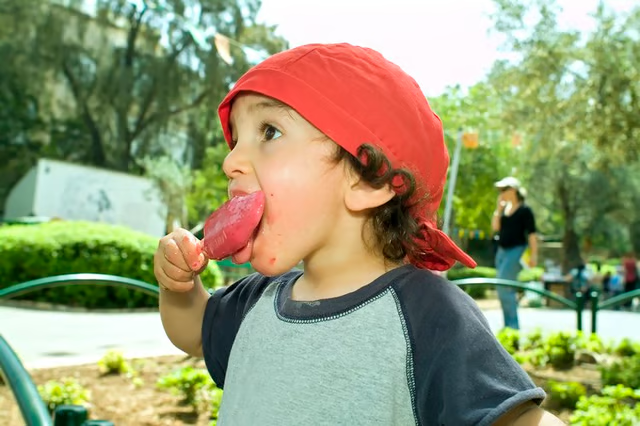
Purchase ice pops and other frozen goods to help numb the inside of the mouth, suggests pediatrician Alan Greene's website. Even if you don't usually give your toddler treats, keeping her mouth numb and hydrated can help her mouth heal faster and reduce her pain.
Offer a dose of pain reliever to help your child when he seems the most in pain. Acetaminophen or ibuprofen, when given according to dosing instructions on the packaging, can help relieve some of the pain and swelling associated with mouth sores. This can also help if your child has suffered from a burned mouth or frequent canker sores.
Schedule an appointment with your doctor for a prescription for xylocaine, a numbing agent. Then, with your doctor's permission, go to the pharmacy and ask the pharmacist to mix the xylocaine with Mylanta, the antacid, and Benedryl. As long as your toddler is old enough to follow directions, she can swish the mixture in her mouth to find a temporary reprieve from her pain, as well as a coating that will help her blisters heal, according to Dr. Wiliam Sears, associate clinical professor of Pediatrics at the University of California, Irvine, School of Medicine. The mixture is not meant to be swallowed, so keep a close eye on your child when she uses the rinse.